Strategic plan

Strategic Plan 2027–2030

Our direction for the next four years: two strategic goals, six objectives and a Nexus approach that links relief, recovery and peace.

A plan for inclusive, just and resilient communities

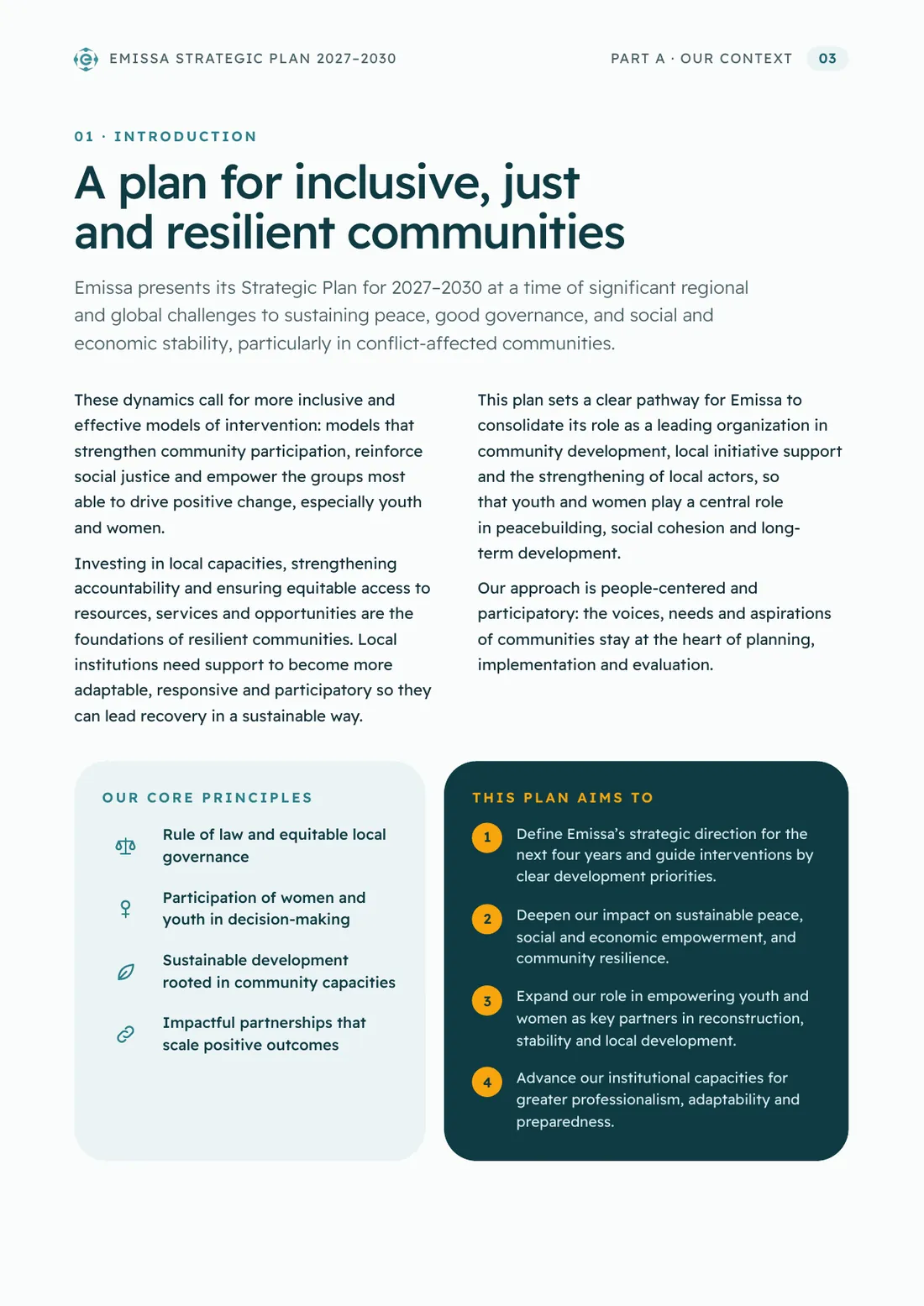
Emissa presents its Strategic Plan for 2027–2030 at a time of significant challenges to sustaining peace, good governance and social and economic stability in conflict-affected communities. The plan sets a clear pathway for Emissa to consolidate its role in community development, local initiative support and the strengthening of local actors, so that youth and women play a central role in peacebuilding, social cohesion and long-term development.

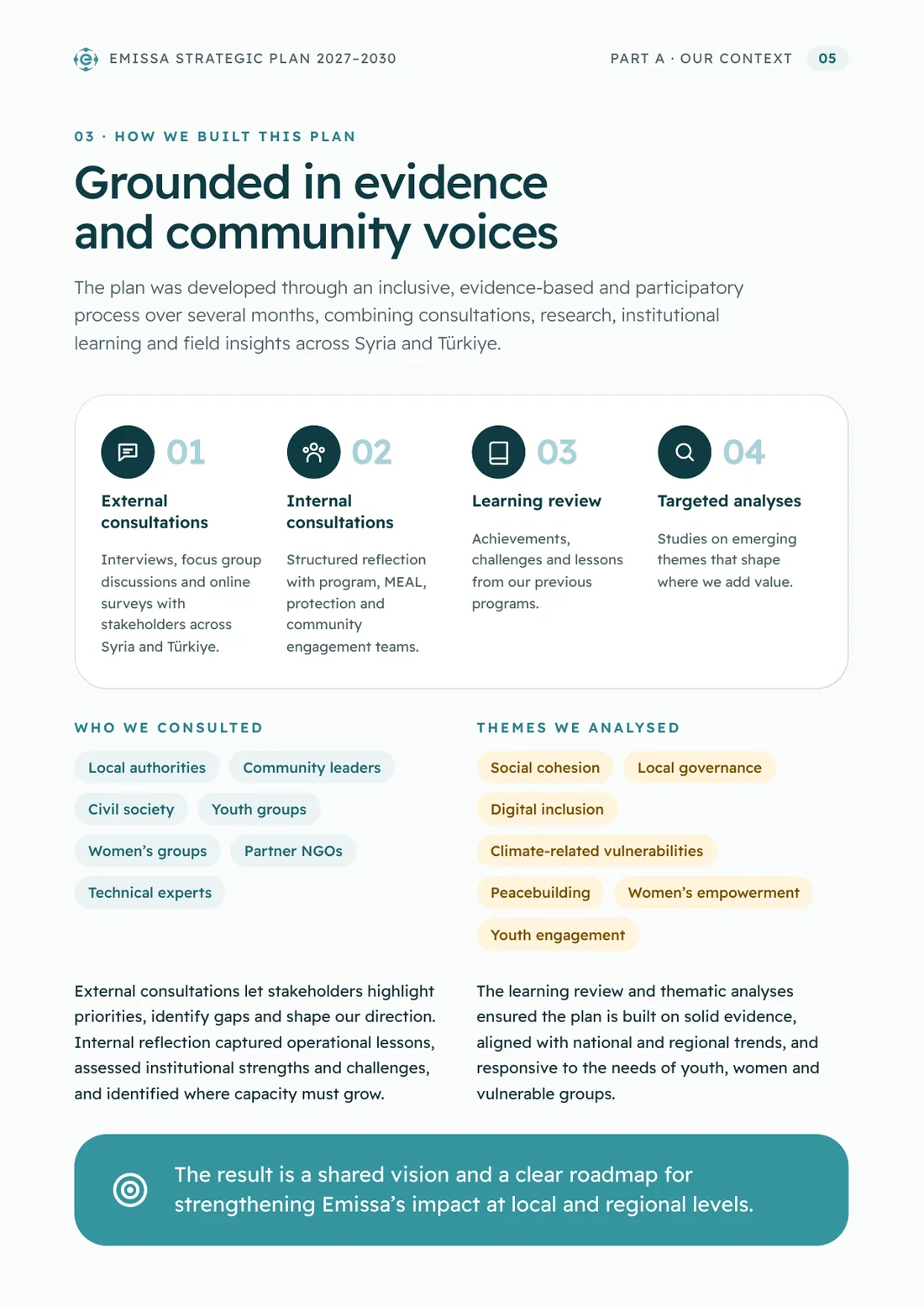
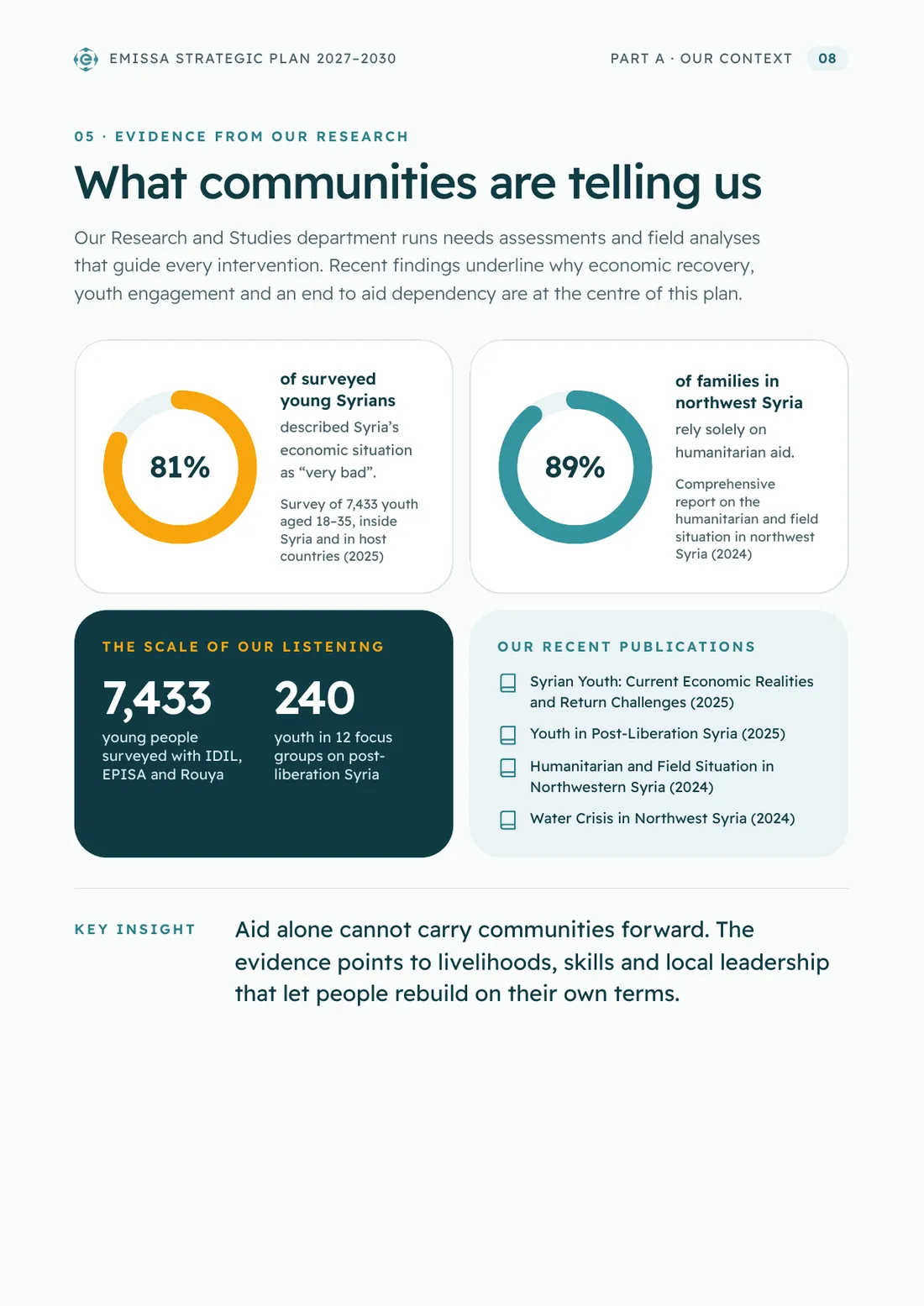
Built through external and internal consultations, a review of our previous cycle and targeted research across Syria and Türkiye, including a survey of 7,433 young people and 12 focus groups with 240 youth.

22 pages · PDF · 4 MB

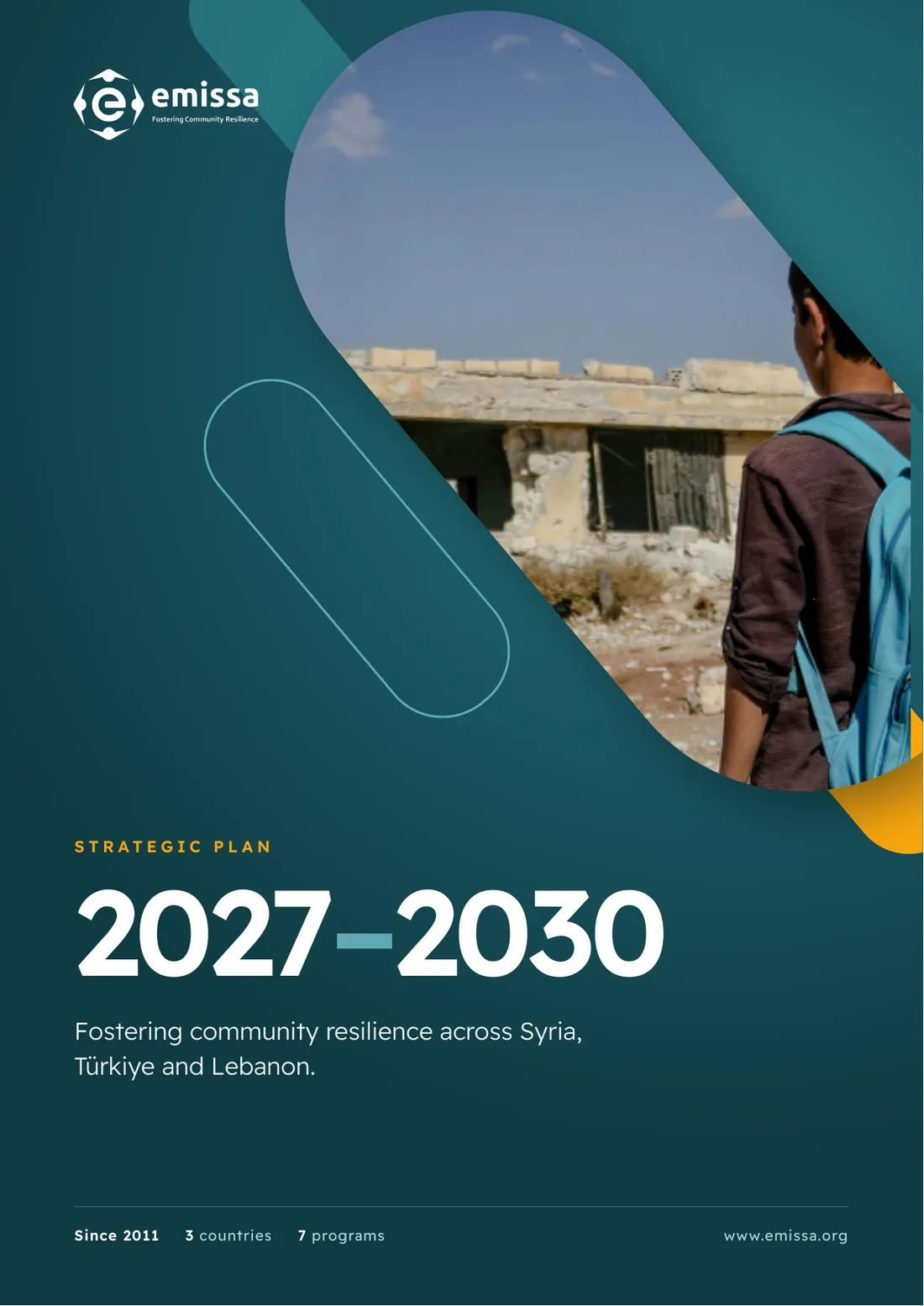
Cover of the Emissa Strategic Plan 2027–2030
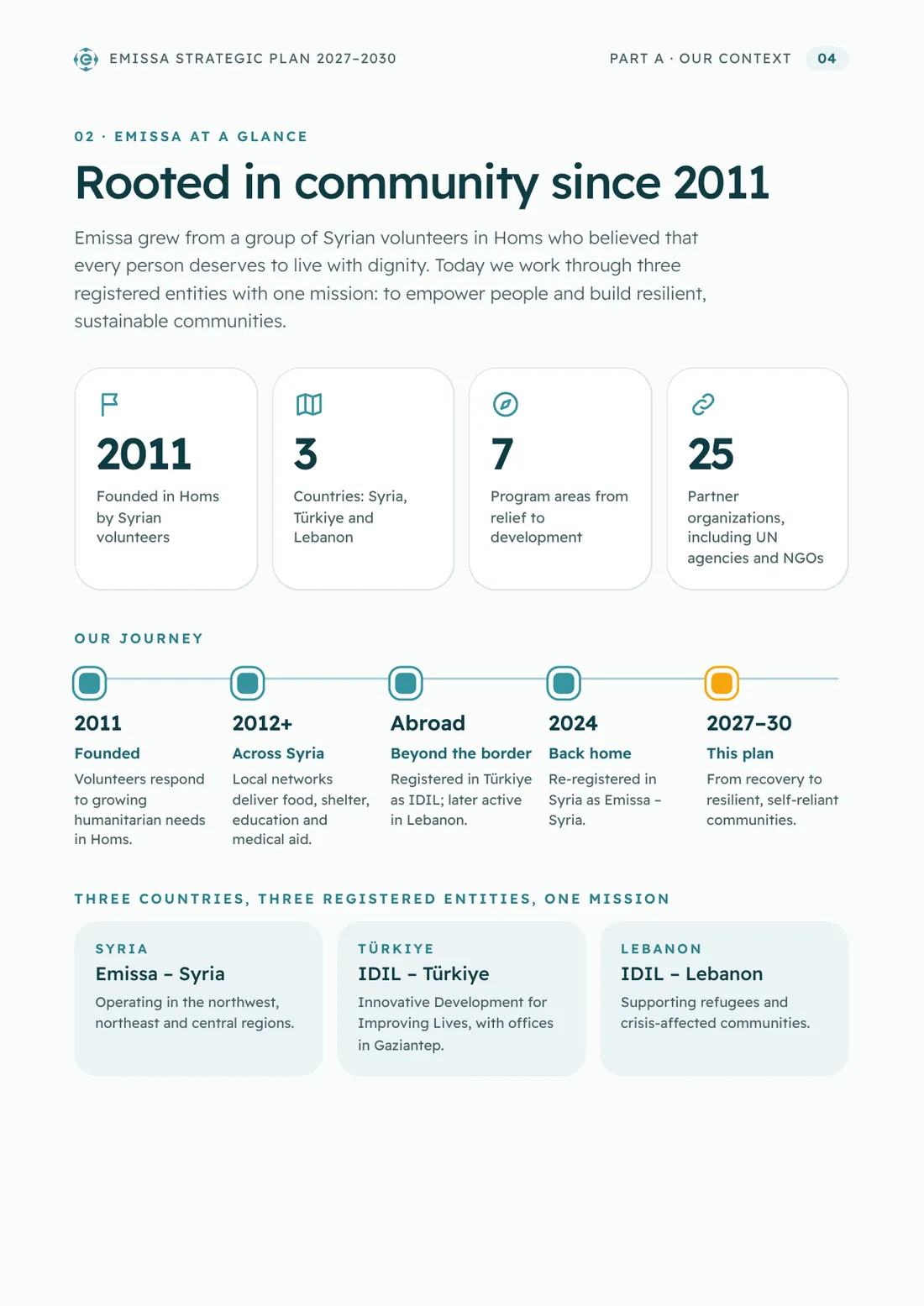
  • 2011 Founded in Homs by Syrian volunteers
  • 3 Countries: Syria, Türkiye and Lebanon
  • 7 Program areas, from relief to development
  • 25 Partner organizations, including UN agencies

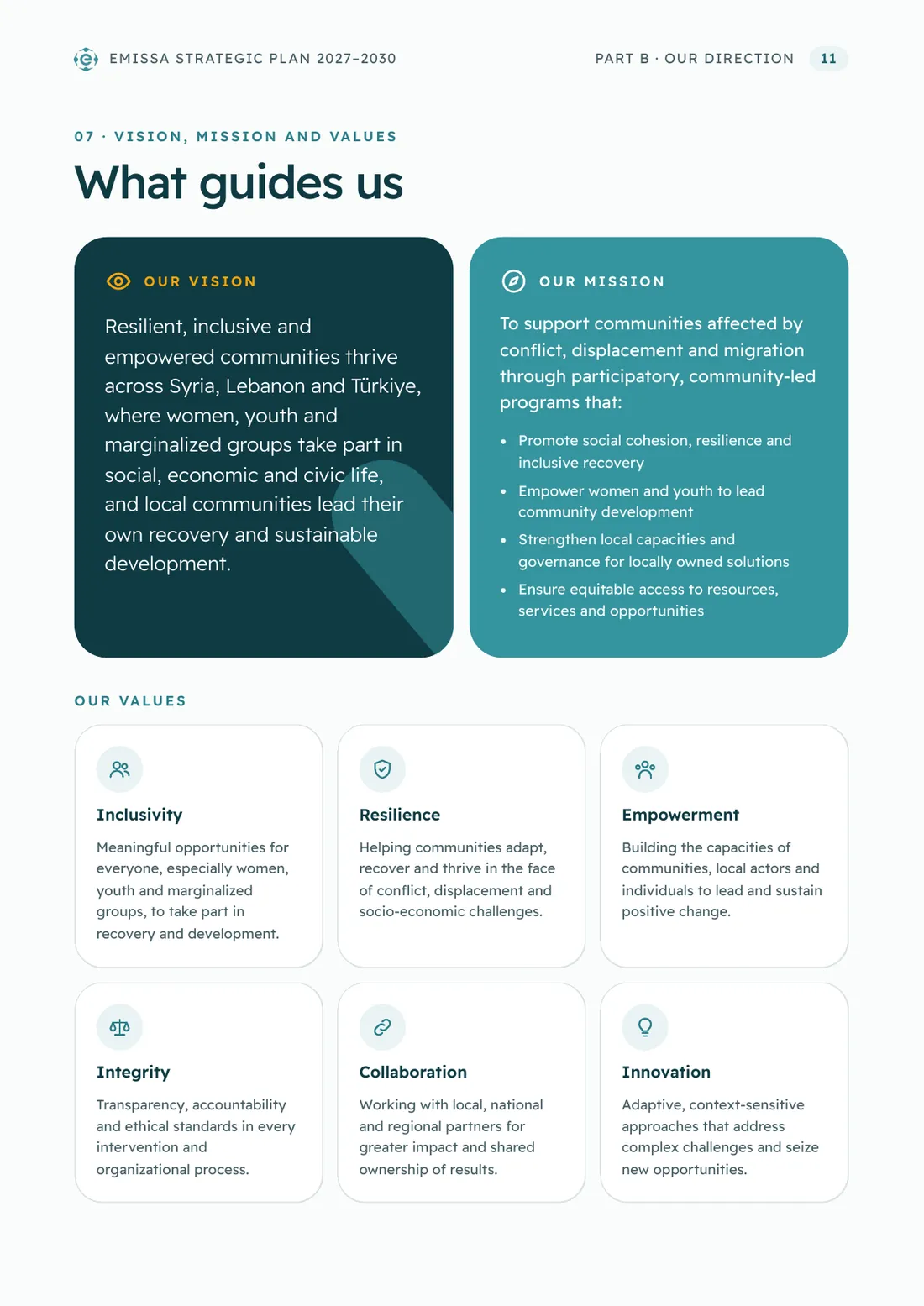
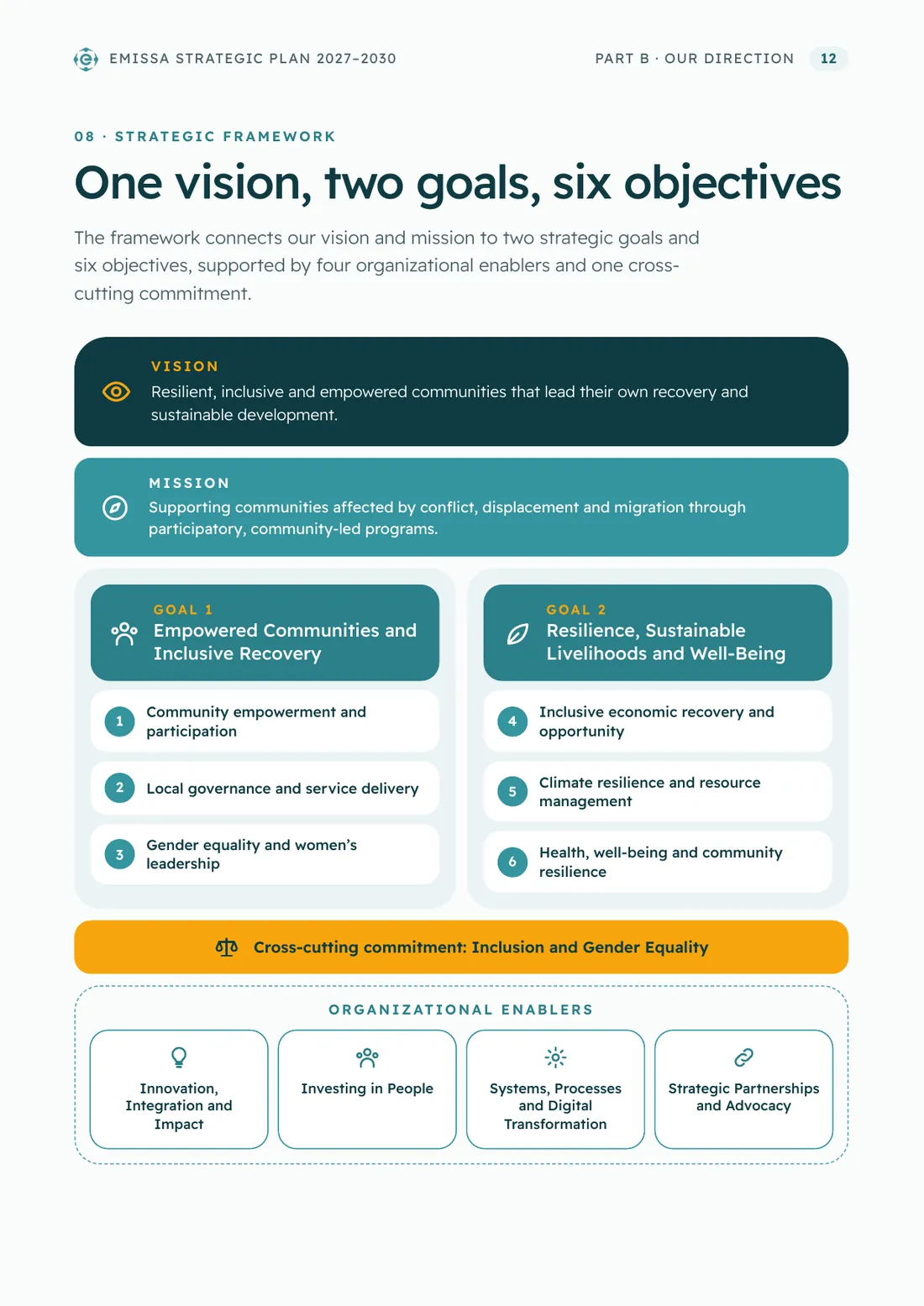
Our vision

Resilient, inclusive and empowered communities thrive across Syria, Lebanon and Türkiye, where women, youth and marginalized groups take part in social, economic and civic life, and local communities lead their own recovery and sustainable development.
Our mission

To support communities affected by conflict, displacement and migration through participatory, community-led programs that promote social cohesion and inclusive recovery, empower women and youth, strengthen local capacities and governance, and ensure equitable access to resources, services and opportunities.

Two goals, six objectives

Supported by four organizational enablers and one cross-cutting commitment: inclusion and gender equality.

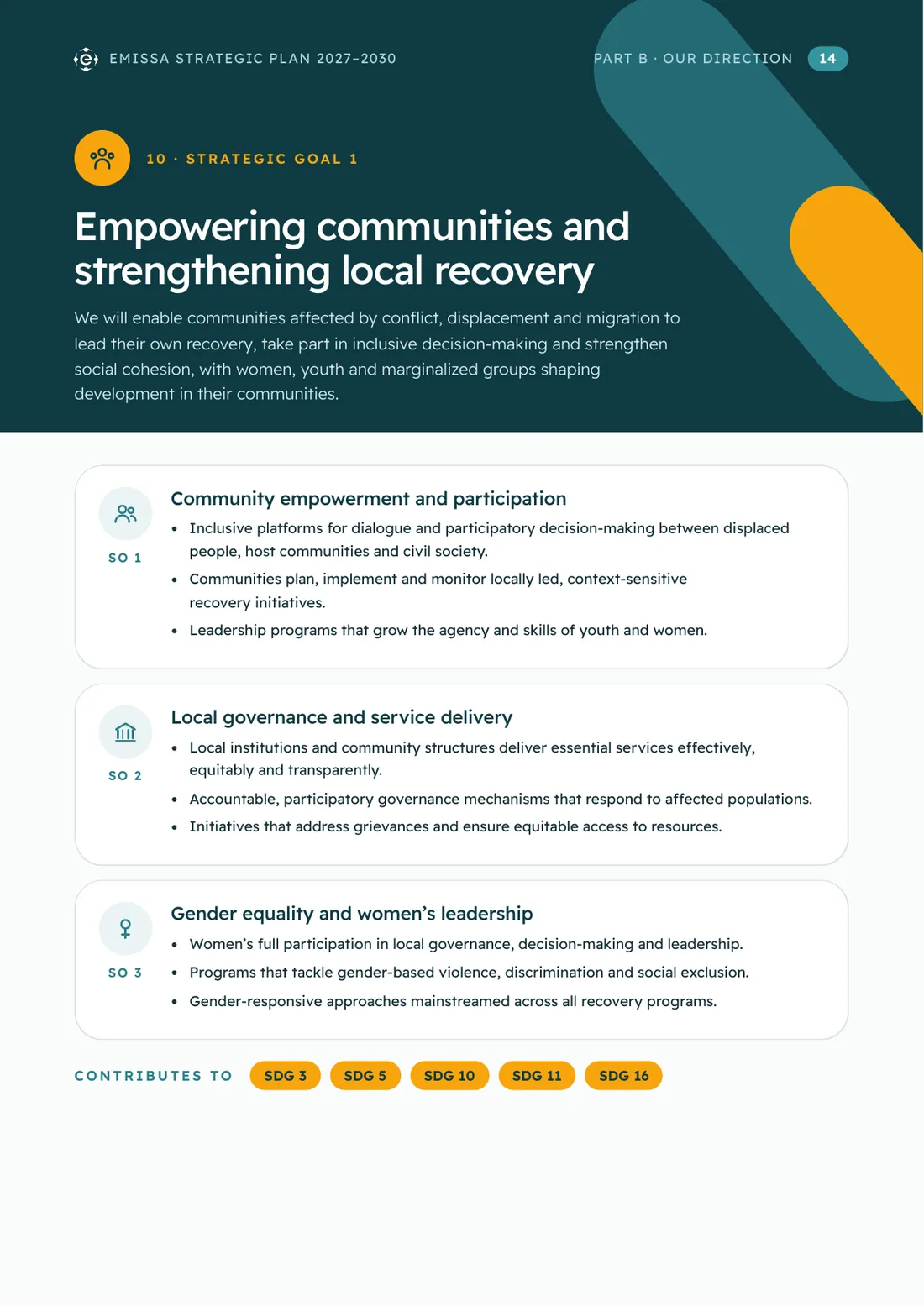
Goal 1

Empowered communities and inclusive recovery

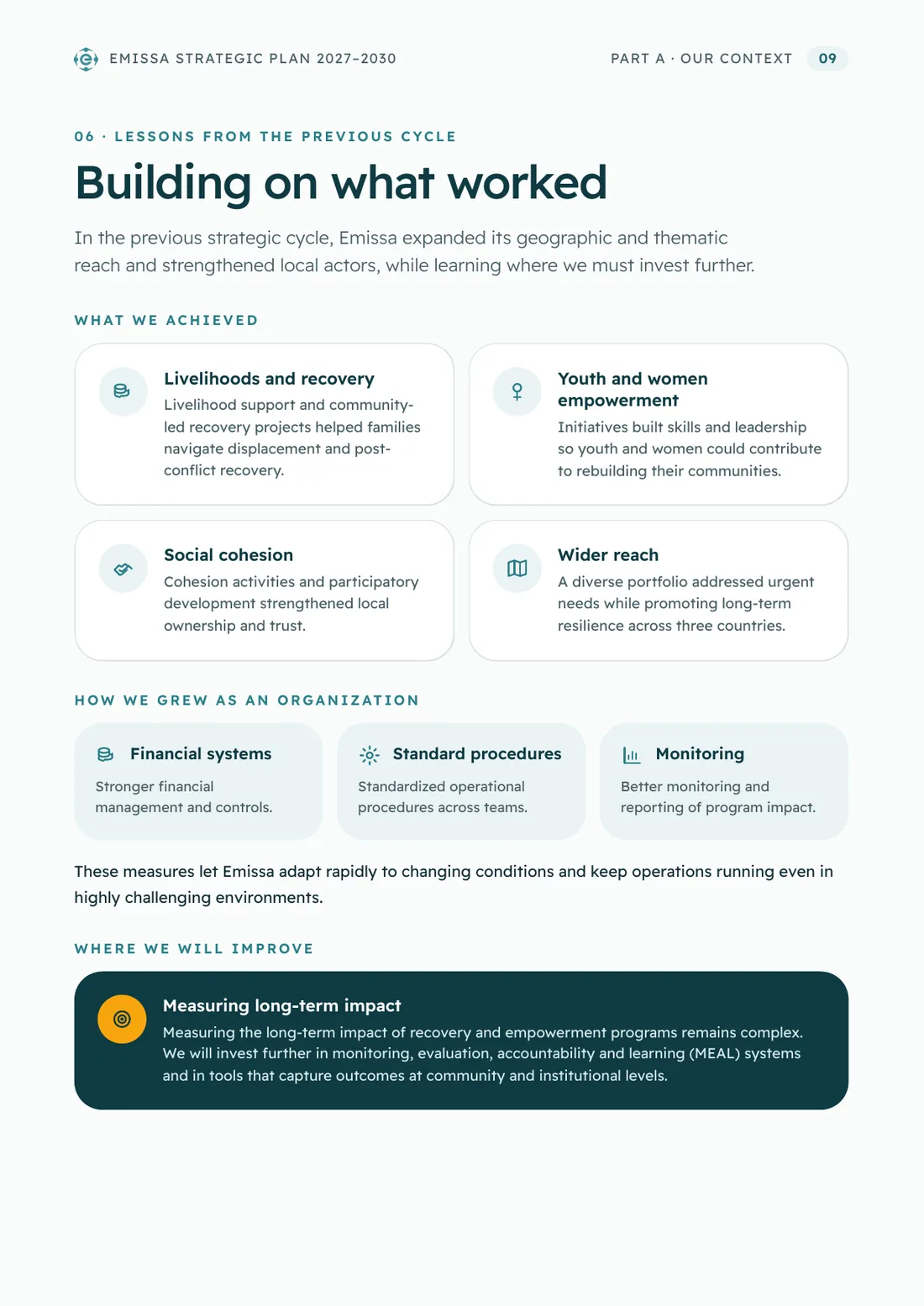
Communities lead their own recovery, take part in inclusive decision-making and strengthen social cohesion, with women, youth and marginalized groups shaping development.

  1. SO 1Community empowerment and participation
  2. SO 2Local governance and service delivery
  3. SO 3Gender equality and women’s leadership

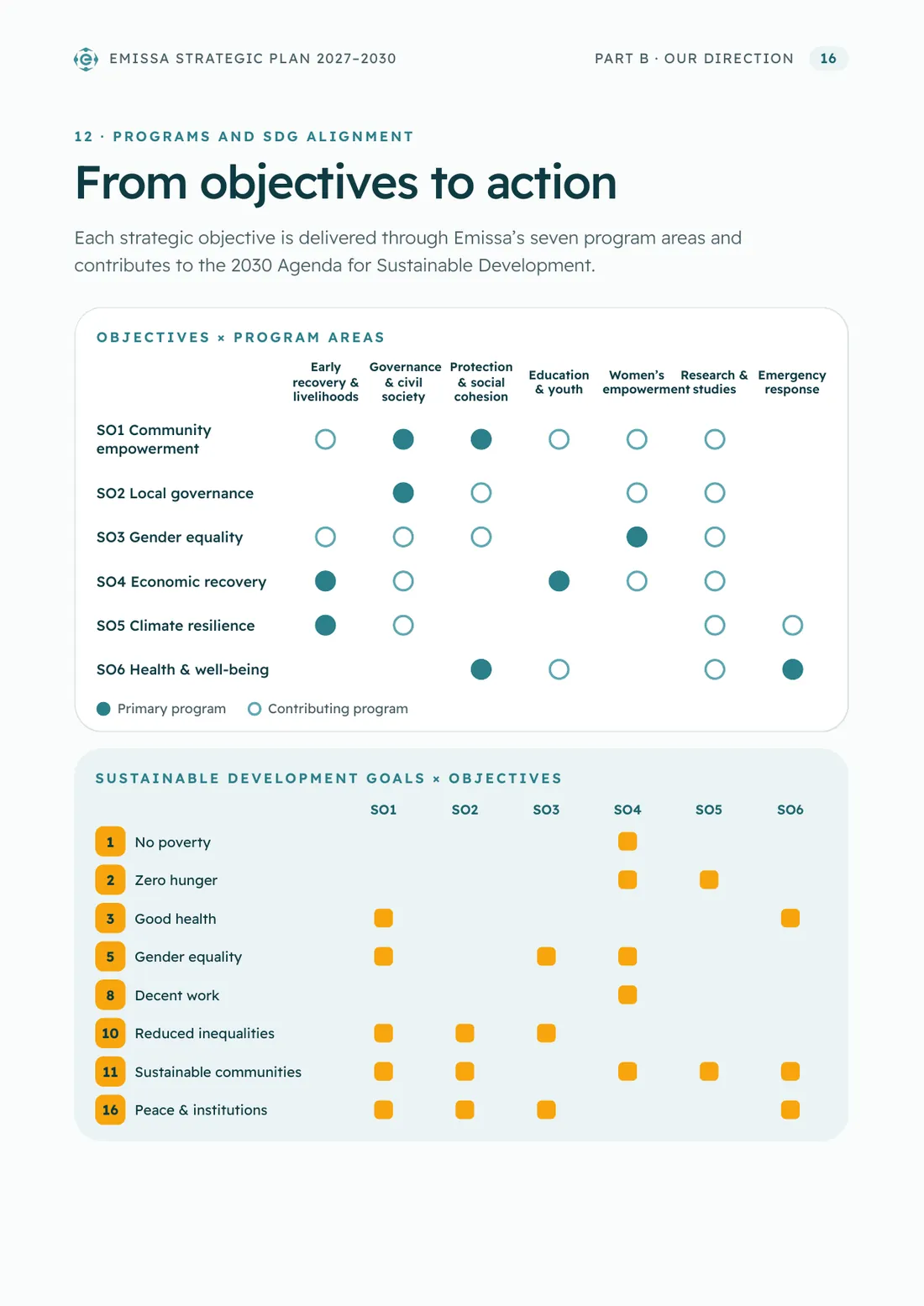
Contributes to SDGs 3 · 5 · 10 · 11 · 16

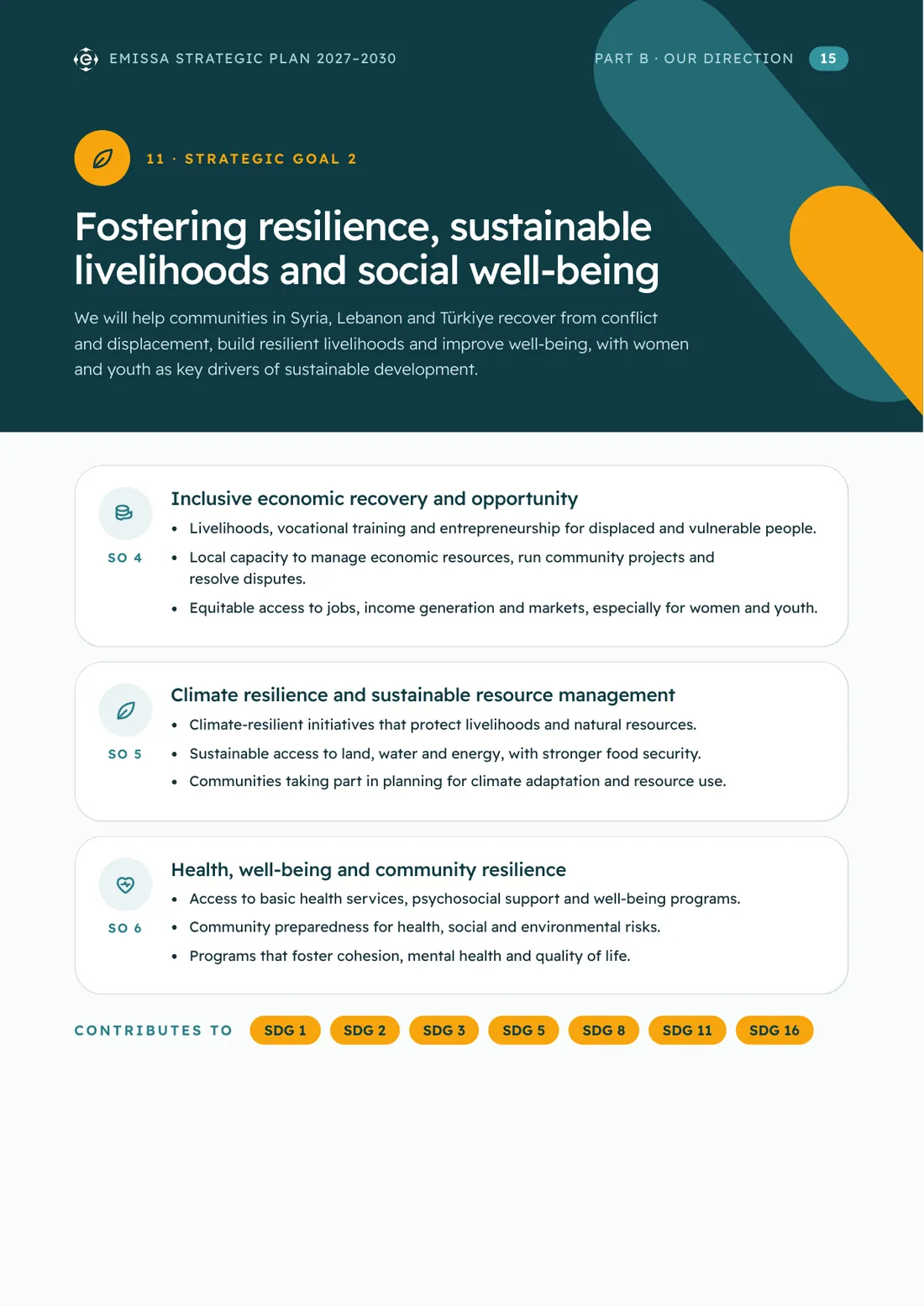
Goal 2

Resilience, sustainable livelihoods and well-being

Communities in Syria, Lebanon and Türkiye recover from conflict and displacement, build resilient livelihoods and improve well-being, with women and youth as key drivers.

  1. SO 4Inclusive economic recovery and opportunity
  2. SO 5Climate resilience and resource management
  3. SO 6Health, well-being and community resilience

Contributes to SDGs 1 · 2 · 3 · 5 · 8 · 11 · 16

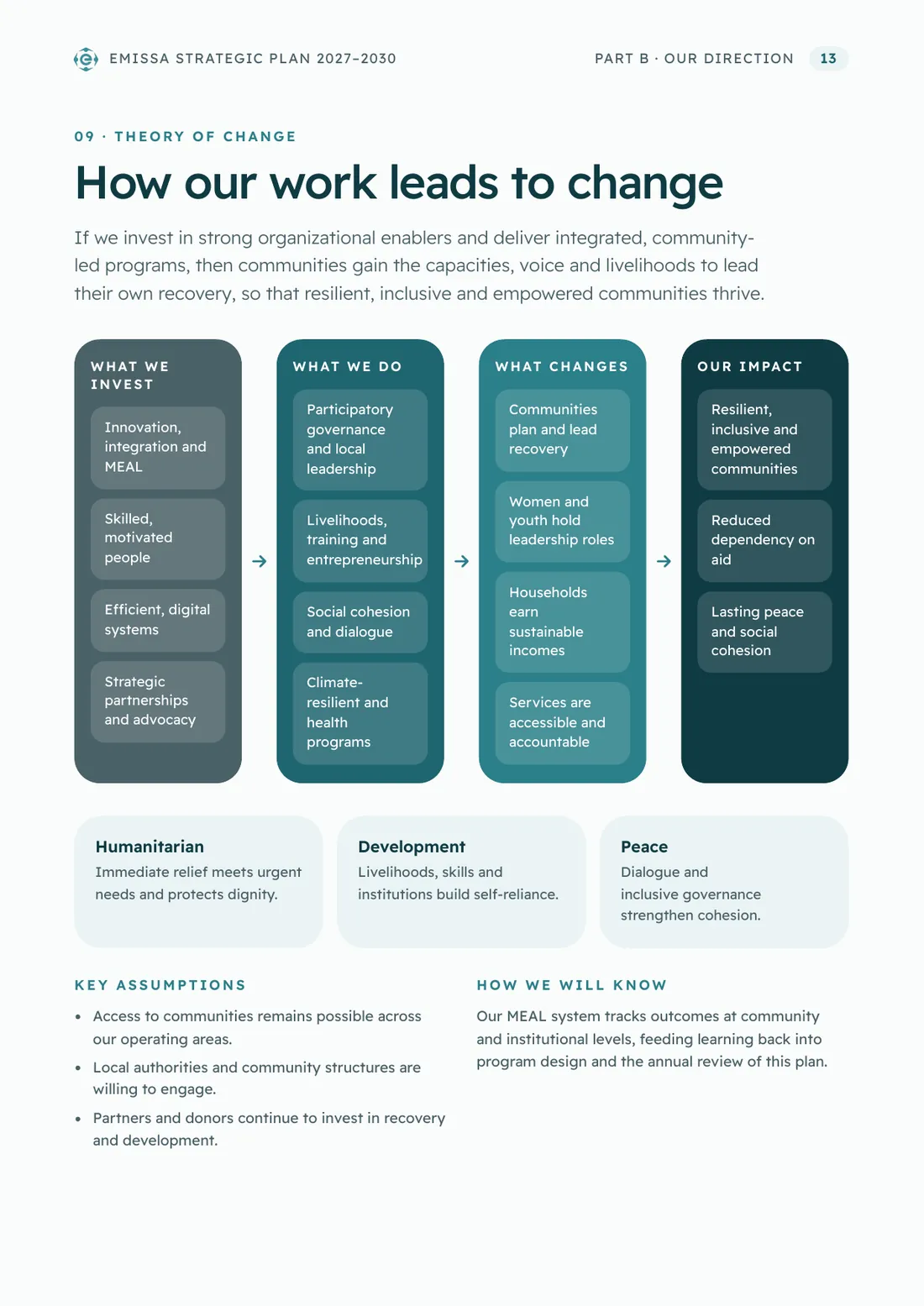
From relief to lasting change

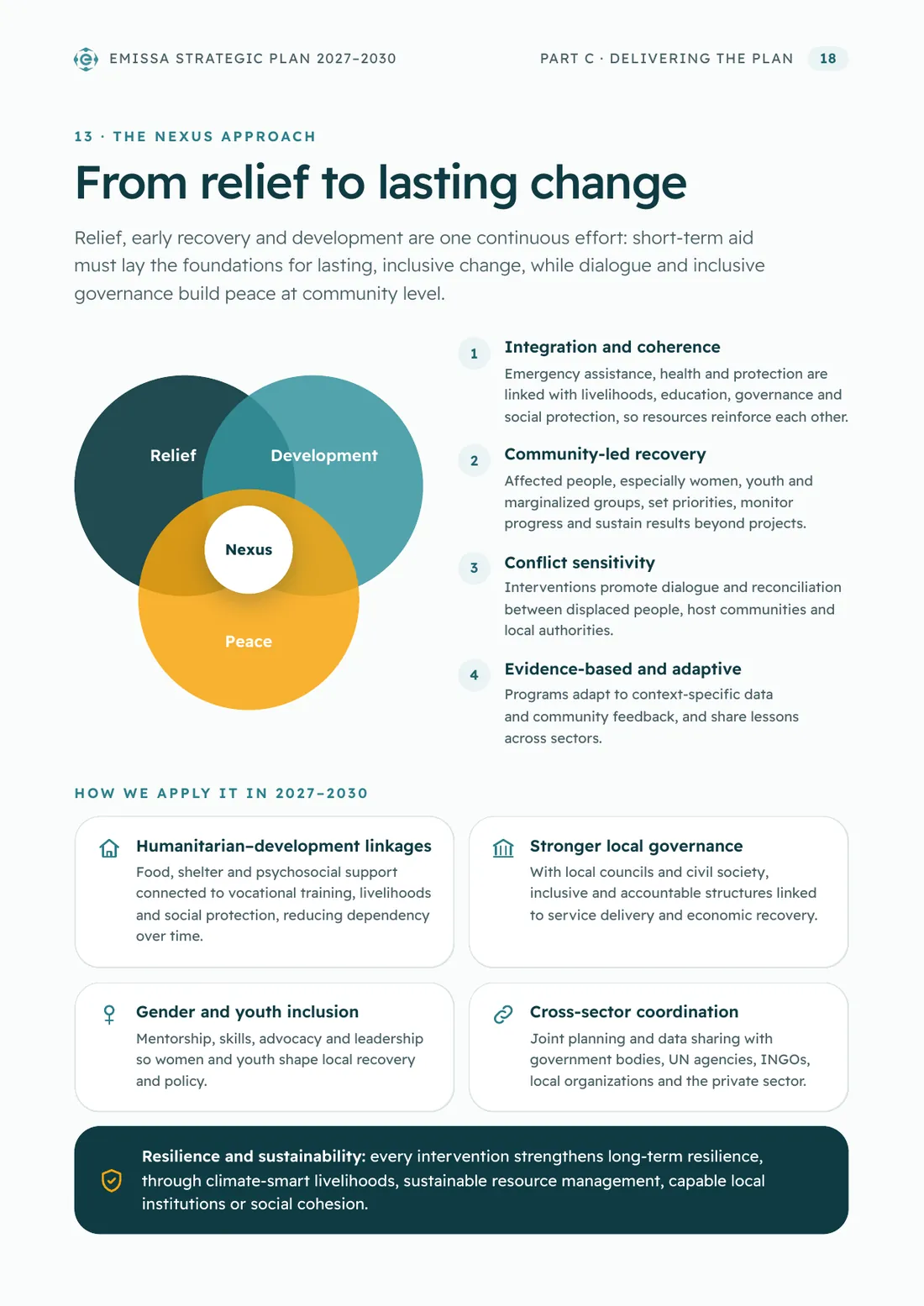
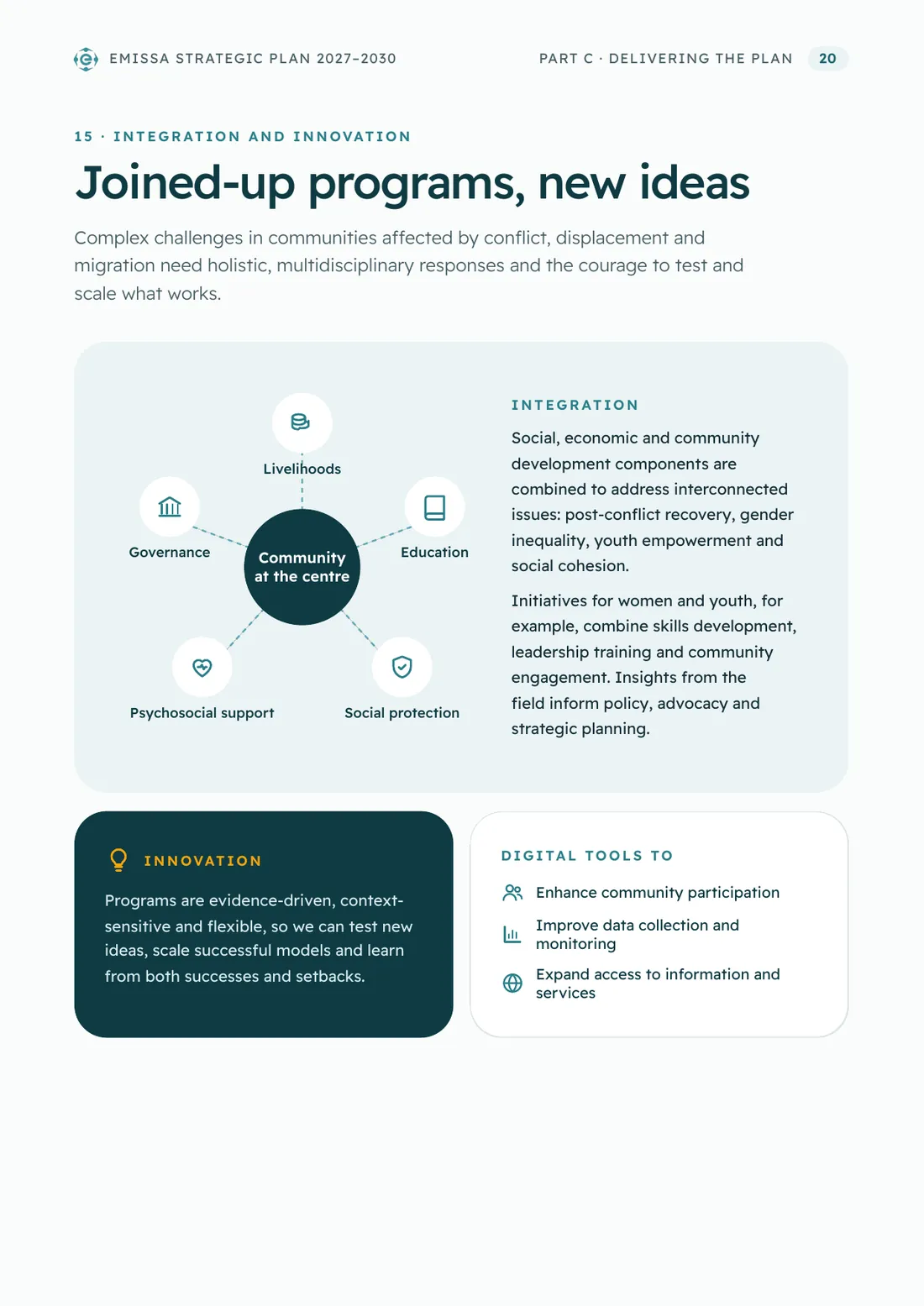
Our Nexus approach treats relief, early recovery and development as one continuous effort, while dialogue and inclusive governance build peace at community level.

  1. Integration and coherence

    Emergency assistance, health and protection are linked with livelihoods, education, governance and social protection.

  2. Community-led recovery

    Affected people, especially women and youth, set priorities, monitor progress and sustain results.

  3. Conflict sensitivity

    Interventions promote dialogue between displaced people, host communities and local authorities.

  4. Evidence-based and adaptive

    Programs adapt to local data and community feedback, and share lessons across sectors.

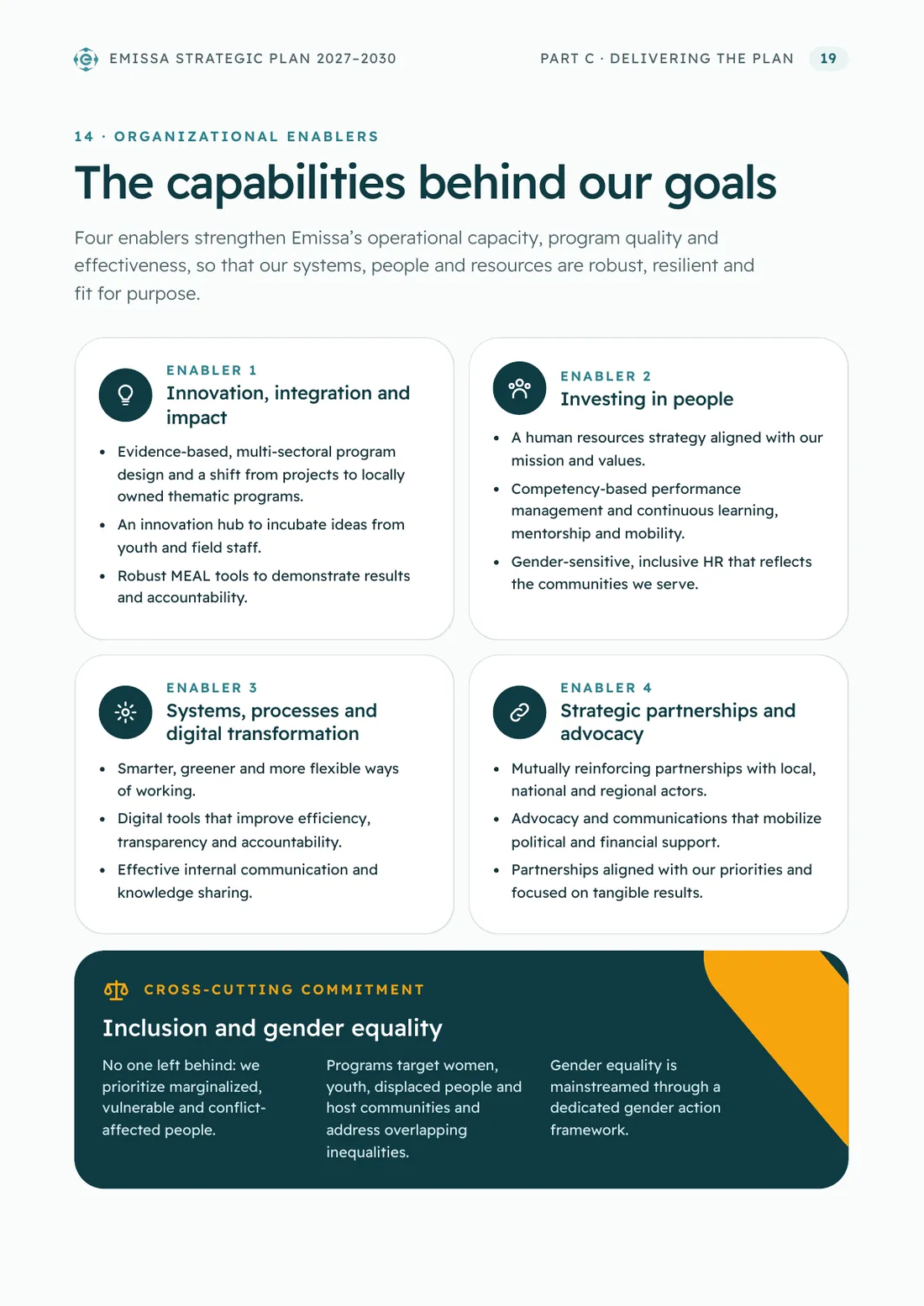
The capabilities behind our goals

  • Enabler 1

    Innovation, integration and impact

  • Enabler 2

    Investing in people

  • Enabler 3

    Systems, processes and digital transformation

  • Enabler 4

    Strategic partnerships and advocacy

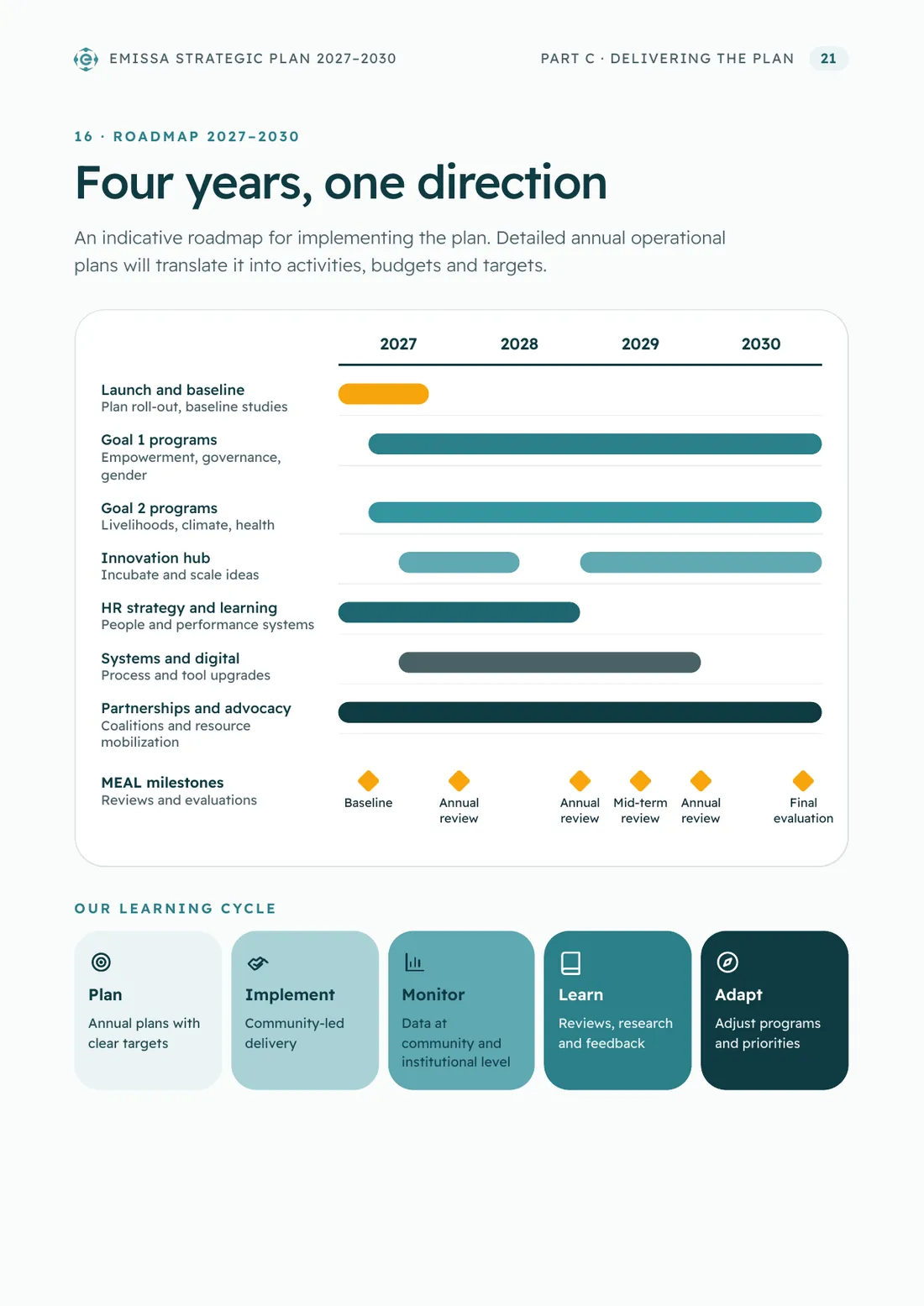
Four years, one direction

An indicative roadmap. Annual operational plans translate it into activities, budgets and targets.

  1. 2027

    Launch and baseline

    Plan roll-out and baseline studies; first annual review.

  2. 2028

    Delivery

    Programs under both goals; annual review.

  3. 2029

    Mid-term review

    Mid-term review and adjustment of priorities; annual review.

  4. 2030

    Final evaluation

    Final evaluation, with lessons carried into the next plan.

Read the full plan

Browse all 22 pages here, or download the PDF to keep or print.

Download PDF
Page 1: Cover
1 Cover
Page 2: Contents
2 Contents
Page 3: Introduction
3 Introduction
Page 4: Emissa at a glance
4 Emissa at a glance
Page 5: How we built this plan
5 How we built this plan
Page 6: Part A · Our context
6 Part A · Our context
Page 7: Operating environment
7 Operating environment
Page 8: Evidence from our research
8 Evidence from our research
Page 9: Lessons learned
9 Lessons learned
Page 10: Part B · Our direction
10 Part B · Our direction
Page 11: Vision, mission and values
11 Vision, mission and values
Page 12: Strategic framework
12 Strategic framework
Page 13: Theory of change
13 Theory of change
Page 14: Goal 1
14 Goal 1
Page 15: Goal 2
15 Goal 2
Page 16: Programs and SDG alignment
16 Programs and SDG alignment
Page 17: Part C · Delivering the plan
17 Part C · Delivering the plan
Page 18: The Nexus approach
18 The Nexus approach
Page 19: Organizational enablers
19 Organizational enablers
Page 20: Integration and innovation
20 Integration and innovation
Page 21: Roadmap 2027–2030
21 Roadmap 2027–2030
Page 22: Back cover
22 Back cover
1 / 22

Partner with us on 2027–2030

We are looking for partners and donors who share this direction.